In this section
In the blog
- Science Review of 2013
- Project in Focus - The Genetics of Colorectal Cancer
- Spirit of Christmas Fayre
- International Conference on Immunotherapy
- Tackling The Rise in Kidney Cancer
- Beatrice Berthon Flies The Flag For Welsh Cancer Research
- Cancer Research Wales Takes To The World Stage
- The Satisfaction of the Long Distance Swimmer
- The role of HPV in Head and Neck cancers
- Meet our scientists: Dr Steve Hiscox

Join CRW’s army of volunteers
or call us for advice on 029 2031 6976
Project in Focus - The HPV Baseline Study
23 Apr 2013
As prevention is always better than cure, Cancer Research Wales has in recent years, been very much interested in vaccination for the prevention of cervical cancer. This cancer is the most common malignancy in women under the age of 35, with the vast majority of cases caused by the extremely common, yet usually harmless Human Papillomavirus (HPV). A current government public health initiative seeks to vaccinate all 12-13 year old girls before they come into contact with HPV. Of the 100 known types of HPV, only 14 of are considered high risk for the development of cervical cancer. The two vaccines currently in use protect against the two most common high-risk types (16 and 18), which cause over 70% of all cervical cancers.
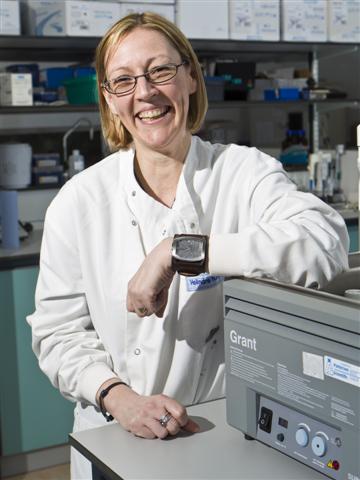
The prevalence of the different HPV types in the Welsh population will have obvious implications for the success of any HPV vaccination programme in Wales. CRW funded research, led by Professor Alison Fiander and Dr Sam Hibbitts (pictured) in Cardiff, has anonymously determined the prevalence of the different HPV types in over 13,000 unvaccinated women. This vital information has been linked to disease severity and the unique patient dataset will in time act as an essential group (unvaccinated) against which those women who have been vaccinated can be compared. Results that will help determine the success of the HPV vaccination programme in Wales. The HPV baseline project will also allow the identification of other potentially high-risk HPV types within the Welsh population that may emerge and replace the types that are targeted and hopefully eradicated. Such findings if realised, will have important implications for the design of second generation HPV vaccines.
As part of the baseline project, a bio-bank of cervical specimens has also been established. The cervical bio-bank will serve as an invaluable resource that researchers can use to help them discover more about the mechanisms by which certain HPV infections initiate and drive cervical cancer, while most others remain perfectly harmless and transient in nature. It is proposed that HPV testing when used alongside cervical screening may be a more effective way to detect cervical cancer in the very early stages. Therefore, the bio-bank containing thousands of clinically relevant specimens will facilitate the discovery of much needed “molecular fingerprints” known as biomarkers to aid prognostication and also uncover possible future drug targets. It is hoped that these biomarkers will better inform clinicians of which particular HPV infections are likely to progress and cause cancer, enabling earlier treatment intervention in these cases. CRW is very excited by the number of different ways that the HPV baseline study may contribute to the future health of the women of Wales and beyond, and we would like to thank all our supporters for making this research possible.
For more information on the role of HPV in cancer and all other projects we fund across Wales, please take a look at our series of research leaflets.